
- #AI
- #Thought Experiment
- #Future
- #Technology
Match Quality Is the New Ad Spend
The funnel was always a tax on ignorance.
Not moral ignorance. Informational ignorance. Buyers did not know who could actually deliver. Sellers did not know who was ready to buy. So we built an entire civilization of billboards, cold emails, SEO theater, retargeting pixels, and LinkedIn thought-leadership cosplay to force strangers into proximity with strangers.
It worked, sort of. It also wasted a grotesque amount of human attention and money.
Here is the thing most "AI will change marketing" posts will not say cleanly:
When agents represent both sides of a market, the product is no longer persuasion. The product is match quality.
B2B deals get done because agents compare company profiles, constraints, delivery history, and risk — then propose terms both principals can accept. Consumers stop getting herded by signals and start getting routed by something closer to who they actually are. Work weeks compress not because of slogans about wellness, but because coordination cost collapses.
That is the optimistic path.
There is a second path where the same machinery becomes a bribery layer for whoever owns the agent. Same tech. Opposite outcome. The hinge is ownership.
This is that essay.
The old game was signal hunting
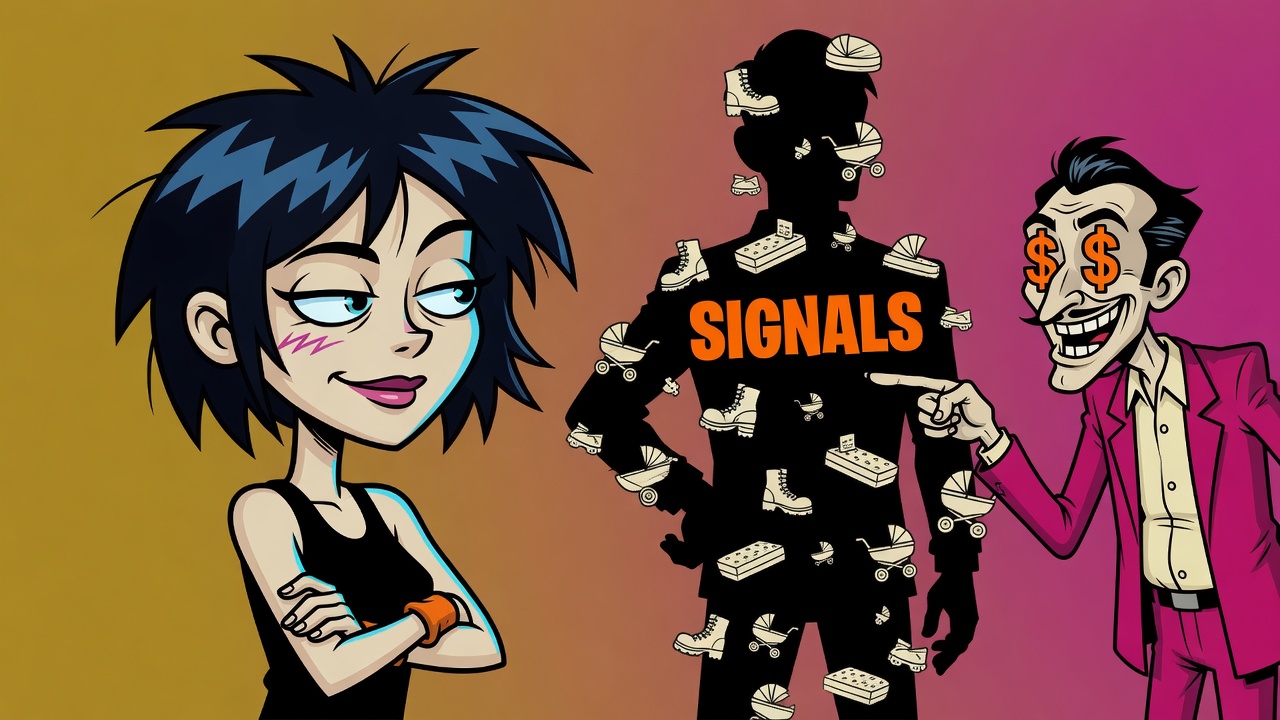 Adtech never knew you. It knew shadows.
Adtech never knew you. It knew shadows.
Clicked a stroller once. Looked at hiking boots. Spent three minutes on a page about sleep. The machine built a cartoon of you and sold that cartoon to the highest bidder. Whole industries optimized for interrupting you at the moment of weakness, not for understanding you at the level of values, goals, aversions, budget, ethics, or taste.
Search was a little better. SEO was still a war for the privilege of being the first link a tired person clicks after typing a vague hope into a box. I already wrote about that dying: The Demise of SEO. Discovery that depends on tricking a ranking function is a temporary equilibrium. Temporary equilibria get temporary profits.
Sales teams, meanwhile, ran on theater. Decks. Dinners. "Relationship." Half of enterprise software buying is still social proof wearing a suit. Useful sometimes. Expensive always. Slow by design.
Agents do not make humans nicer. They make the search space computable.
B2B: profile meets profile
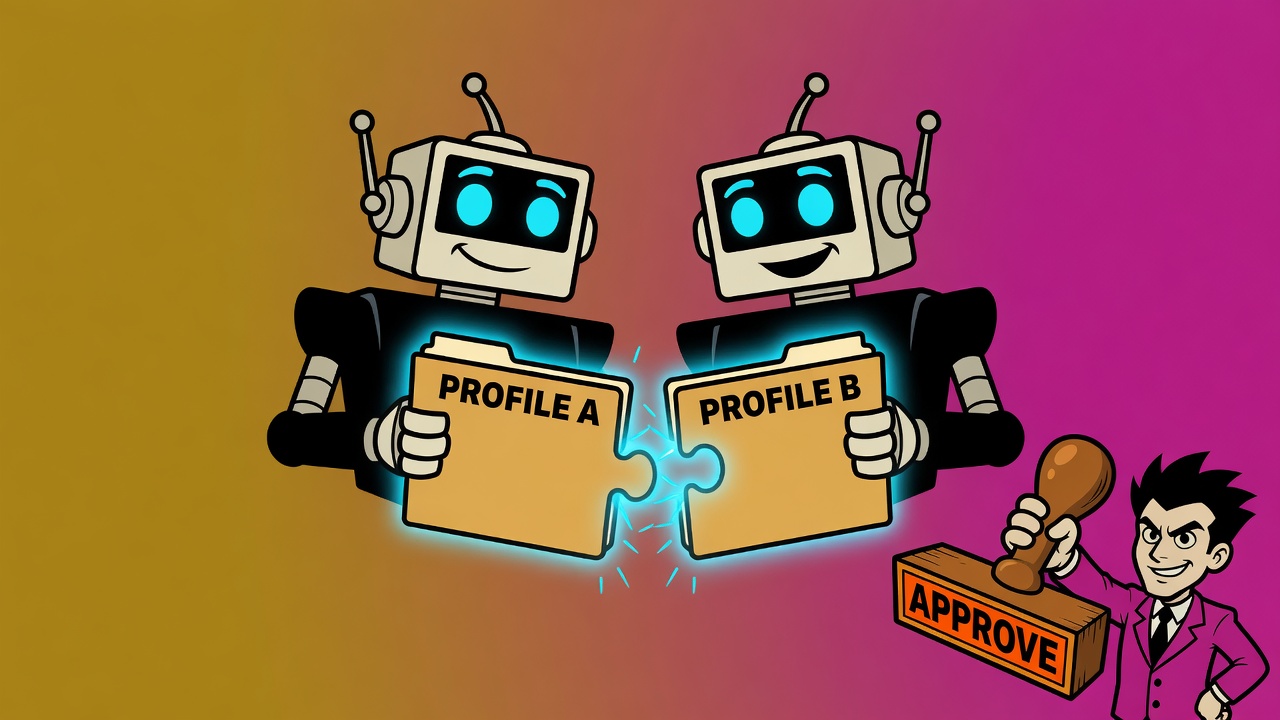 Profile meets profile. Humans keep the veto.
Picture two companies.
One needs a vendor that can ship X under compliance Y, with integration Z, budget B, and a hard line on data residency. The other company can actually do that — not in a brochure sense, in a dataset sense: uptime history, security posture, delivery receipts, contract templates, stack compatibility, values constraints, and what they refuse to do.
Today, that match is mediated by humans who partially know both sides and partially perform for a commission.
Tomorrow, the default path looks more like this:
- Both companies maintain an agent-readable profile — living, versioned, auditable.
- Buyer agents query the market the way a compiler queries available modules.
- Seller agents respond with structured offers, not vibes.
- Agents negotiate within policy envelopes set by humans (price floors, risk caps, legal templates).
- Humans approve, reject, or escalate the edge cases.
Sales does not disappear. Closing theater does.
The scarce skill flips. It is no longer "who can get the meeting." It is:
- How truthful is your company dataset?
- How clean are your constraints?
- How machine-legible are your terms, SLAs, and ethics?
- Can your agent defend a claim with evidence, or only with adjectives?
Companies that lie in their profile will not get a slap on the wrist from a blogger. They will get systematically downranked by trust graphs that other agents share, the same way spam eventually lost to better filters. Reputation becomes a computational object, not a vibe on a review site.
Humans still set policy. Agents compress the haggling. Enterprise politics do not vanish — risk aversion, CYA, and empire-building are features of organizations, not bugs of email — but the interface of buying changes from golf courses to protocols.
If you run a B2B company and your public surface is still a brochure and a contact form, you are preparing to be invisible to the next generation of buyers.
B2C: from cookies to character
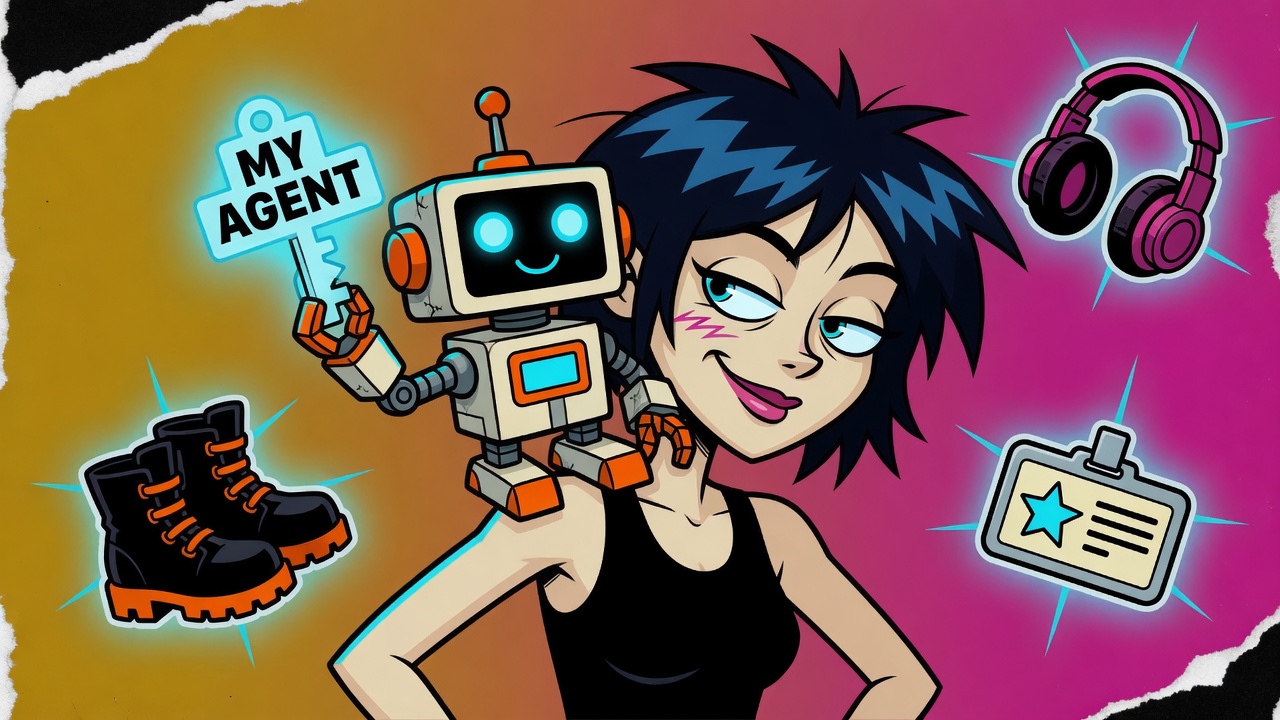 Your agent becomes the gatekeeper for attention.
On the consumer side, the leap is bigger and more personal.
A chatbot that has been trusted for years — goals, non-negotiables, health constraints, budget, aesthetics, politics you care about, politics you refuse to subsidize, the brands that already burned you — is not a "signal." It is a portable model of a person, with consent layered over time.
That is the opt-in flywheel:
- Share a little → better matches
- Share more → better still
- Trust the agent → it becomes the gatekeeper for attention
When the gatekeeper is your agent, interruptive ads stop making economic sense. You do not need to be convinced mid-scroll that you secretly want a mattress. Your agent already knows your sleep problems, your budget, your ethical filters, and which companies have receipts.
Marketing does not die. Marketing as dopamine arbitrage dies.
What replaces it is legibility:
- What does this company actually believe?
- Who works there, and what is the craft culture?
- What do they refuse to do for money?
- What happens when something breaks?
- Is the product a match for this human, not "people like this human in a lookalike audience"?
Company values, ethos, and the personalities of the people building the thing stop being About page poetry. They become matching features. Aggregate psychological data in the creepy sense is the wrong frame. The right frame is: evidenced behavior + stated constraints + portable preference models, under consent.
If that sounds soft, it is not. Match quality is a harder metric than click-through rate. CTR rewards manipulation. Match quality rewards being the real thing for the right person and invisible to everyone else.
That is a better world for humans. It is a worse world for companies whose entire edge was attention theft.
The hinge: who does the agent work for?
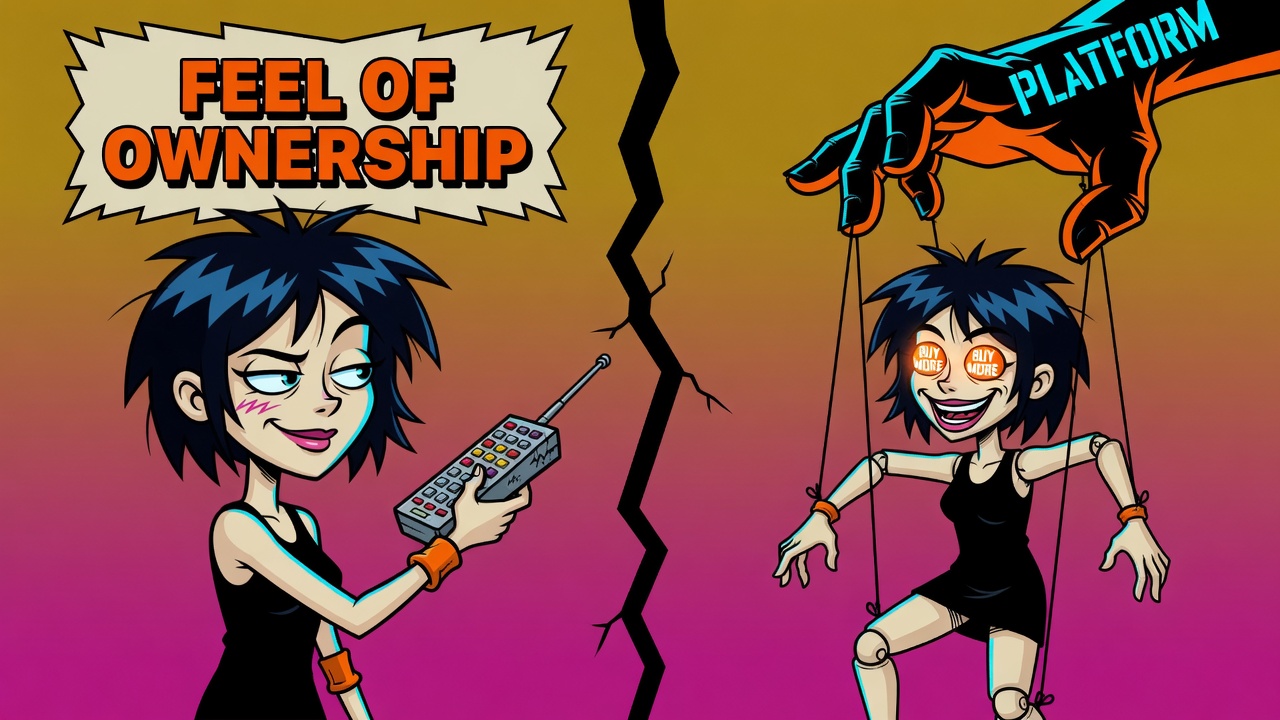 Same architecture. Opposite politics.
This is the load-bearing sentence of the whole thesis.
If your agent works for you, ad spend becomes less relevant. If your agent works for a platform, ad spend mutates into bribery of the intermediary.
Same architecture. Opposite politics.
Platform-owned agents will not kill marketing. They will invent "preferred partners," placement fees, affiliate kickbacks dressed up as "helpfulness," and quiet ranking boosts for whoever pays. You will still be sold. You just will not see the billboard. The billboard will be inside the trusted advisor.
User-aligned agents — personal, portable, with something closer to a fiduciary duty — reverse that. The company that wins is the one that is the best match, not the one that bought the ranking.
So when people say "AI kills ads," translate:
AI kills ads if the matching layer is owned by the human.
Otherwise AI industrializes ads into a form you cannot skip as easily.
Portability matters. If leaving a platform means losing the model of yourself you spent years training, you are not a customer. You are livestock with a chat interface.
Prefer agents and profiles you can export. Prefer open protocols over walled gardens. Prefer systems that show why a match was made. Black-box "trust me" is just the new brand.
I wrote years ago about AIs developing opaque internal codes humans cannot audit (The Coming Code). Matching markets will hit the same wall. If you cannot inspect the reasons, you do not have a market. You have a priesthood.
What companies become
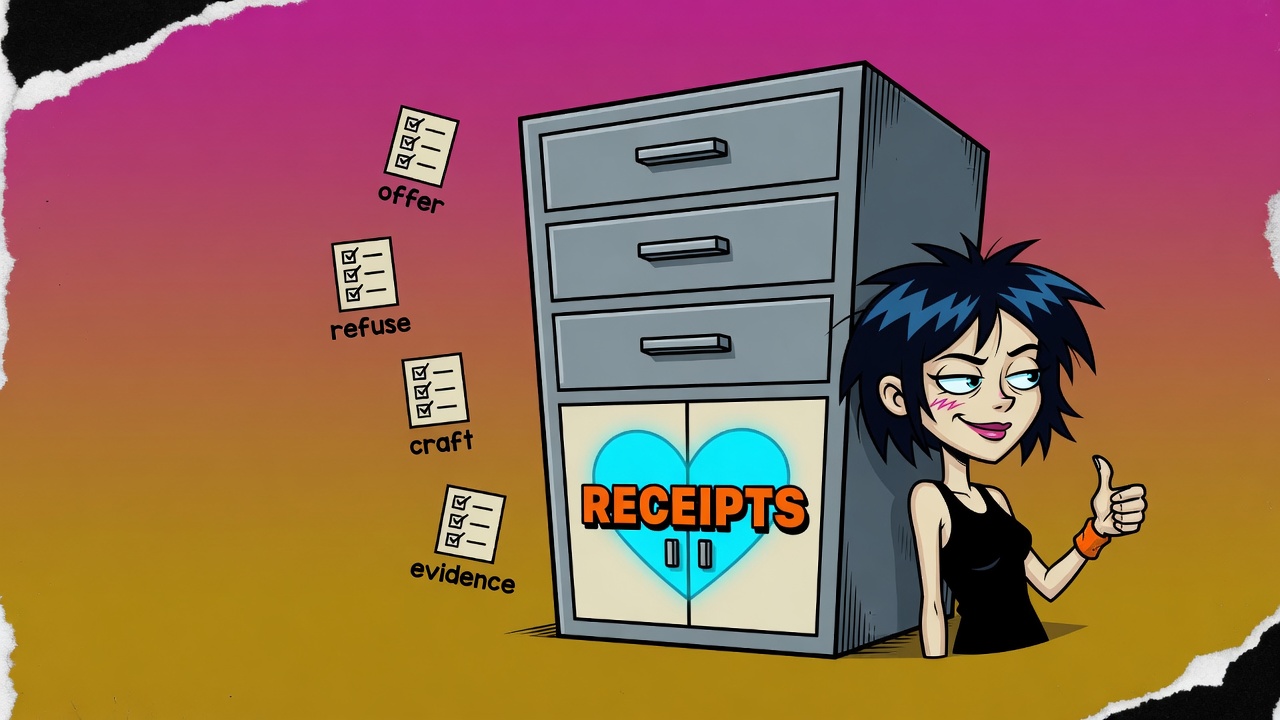 Brand becomes evidence under audit.
Under ethos markets, the winning company surface looks less like a campaign and more like a public dataset with a soul.
Not soul as mysticism. Soul as:
- clear offers
- clear refusals
- real people with real craft
- delivery history
- values that survive contact with a contract
- evidence when claims are made
Brand becomes evidence under audit. Culture becomes a product feature because culture is what agents will eventually score when humans ask "who should I work with?" and "who should I buy from?" and "where should I work?"
Jobs and ventures get the same treatment. Matching people to companies stops being a resume lottery and starts looking like mutual constraint satisfaction: skills, values, hours, risk tolerance, mission fit. The LinkedIn circus was always a broken approximation of that problem.
If your company cannot explain itself in structured form without lying, the agent era will not be kind to you. That is not a threat. That is a filter.
Work, identity, and the hamster wheel
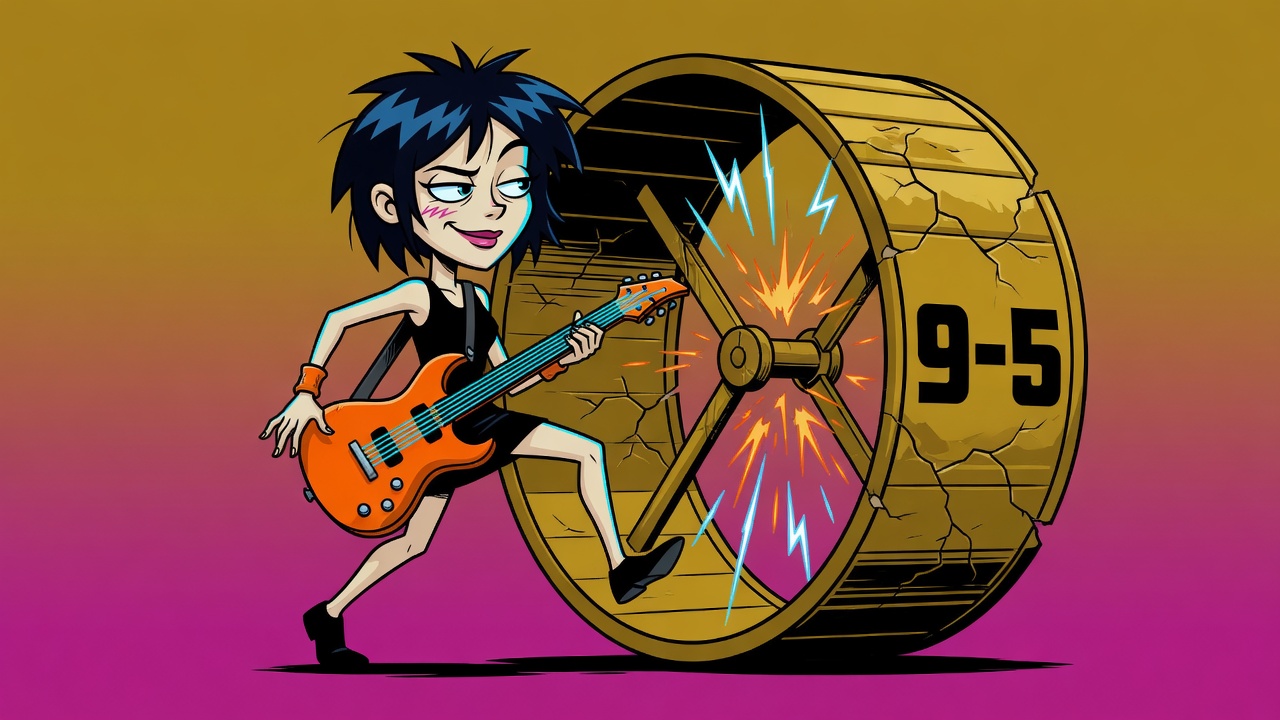 The 9–5 employee identity dies slowly, not in a press release.
I already made the case that AI should replace nearly every job, not as apocalypse, but as liberation from unfulfilling loops (Here's Why AI Should Replace Nearly Every Job). This piece is the market-layer version of the same idea.
When coordination is cheap, you need fewer humans sitting in meetings translating half-known facts between silos. When execution is partially automated, the 40-hour container stops being sacred. Costs go down first in coordination, search, and persuasion — the tax layers — not magically in housing, energy, or physical scarcity.
Shorter work weeks are a possible outcome, not a physics law.
History is full of productivity jumps where surplus went to capital, not leisure. If agents are owned by platforms and firms capture all the efficiency, you get cheaper operations and the same exhausted humans. If agents are owned by people and bargaining power adjusts, you get room: hobbies, craft, family, voluntary projects, the stuff that used to be "what I'll do when I retire" compressed into ordinary life.
The 9–5 employee identity dies slowly, not in a press release. Identity reorganizes around:
- what you build
- who you help
- what you refuse
- the communities you actually show up for
Some people will miss the structure. Fair. Structure can be chosen. Structure as a cage with a W-2 on it does not need to be the default forever.
None of this requires believing humans become lazy angels. It requires believing a large share of modern work was matching, status, and busywork dressed as necessity — and that agents eat that layer first.
The dark twin
 Coerced opt-in is a toll booth on personhood.
Say the optimistic version out loud enough and you start to hear the other version under it.
Coerced opt-in. "Share more of yourself or get worse outcomes." That is not free consent. That is a toll booth on personhood. Good systems make minimal disclosure work and treat deeper sharing as a privilege the user grants, not a debt they owe.
Filter bubbles as destiny. Ethos matching can trap people inside mirrors. Useful for buying boots. Dangerous for news, politics, and identity. Agents should be able to surface productive disagreement, not only comfortable resonance.
Values cartels. If a handful of platforms define what "good ethos" means, matching becomes soft social credit. Diversity of agents and open scoring matter more than any single company's ethics PDF.
Employees as brand substrate. Scraping the personalities of workers to sell the company without their agency is ugly. Company ethos should be stated policy plus evidenced behavior, not non-consensual psych profiles of staff.
Opaque ranking. If you cannot see why you were matched or excluded, you are not in a market. You are in a mood.
The dark twin is not a reason to reject ethos markets. It is the reason to build them like infrastructure, not like a growth-hacking toy. Mechanical constraints beat vibes. Portable identity beats platform lock-in. Audit trails beat "our model knows best."
What to do now
You do not need to wait for the full agent economy to start acting like it is coming.
If you run a company:
- Make your offers, constraints, and refusals explicit. Agents hate ambiguity; humans only pretend to like it.
- Collect receipts: delivery, security, support, outcomes. Evidence is the new creative.
- Treat brand as something that survives structured interrogation, not just a color palette.
- Build products that are good for a specific kind of person, not "everyone 18–45 with disposable income."
If you are a person:
- Treat your personal agent like a fiduciary, not a toy. What you feed it becomes the map of you.
- Prefer tools that export your preferences and history.
- Notice when "recommendations" start smelling like paid placement. Ask for reasons.
- Spend time on hobbies and craft before the culture tells you it is allowed. The hamster wheel ends earlier for people who stop asking permission.
If you build the systems:
- User alignment is not a slogan. It is architecture: local data, portable profiles, inspectable match reasons, default-deny for selling the user out.
- Do not rebuild adtech with better NLP and call it helpfulness.
The reallocation
Here is the clean version of the future I think is most likely:
B2B sales becomes agreement between agents over company profiles and datasets, with humans holding the veto.
Consumer recommendations stop being shadow-puppetry over clickstreams and start being match quality against a consent-rich model of a person — their ethos, not just their signals.
Ad spend loses power wherever the agent is loyal to the human. It reinvents itself as intermediary capture wherever the agent is loyal to the platform.
Work weeks can get shorter. Costs can fall in the layers that were always pure friction. People can pick up hobbies and stop confusing "employee" with "self." None of that is automatic. It is a fight over ownership of the matching layer.
The funnel was a tax on ignorance.
Agents remove the ignorance.
What remains is the only question that ever mattered in markets:
Who is the match for — and who gets paid when the match is made?
If the answer is "the human, with a machine that works for them," we get something better than marketing.
We get a world where the right people find the right businesses, services, jobs, and ventures because the truth was legible — not because somebody bought the loudest interruption.
That is not utopia.
It is match quality.
And match quality is the new ad spend.